You bought the bins from The Container Store. You watched the shows. You cleared the whole kitchen on a Saturday and felt that rare, electric feeling of a house that finally worked. Three weeks later you were standing in the same chaos, wondering what was wrong with you.
Nothing is wrong with you. But something is very wrong with every organizing system you've ever been handed.
I'm Kim Reynolds — a professional organizer with fifteen years of experience, currently serving Sarasota, Lakewood Ranch, Venice, and Siesta Key. A significant number of my clients have ADHD. Not because I sought that niche, but because they kept calling me after everything else failed. What I've learned in those 500+ homes is something the organizing industry doesn't say loudly enough: ADHD brains don't fail at organizing. They fail at systems designed for entirely different brains.
The Real Reason Your Sarasota Home Keeps Falling Apart
Every organizing system you've ever tried — the color-coded binders, the label maker, the matching baskets — was designed for a brain that processes information linearly. Step one. Step two. Put it back exactly here. Remember where that is tomorrow.
For most people, that works. For an ADHD brain, it's like being handed instructions in a language you don't speak and then being told you're failing at reading.
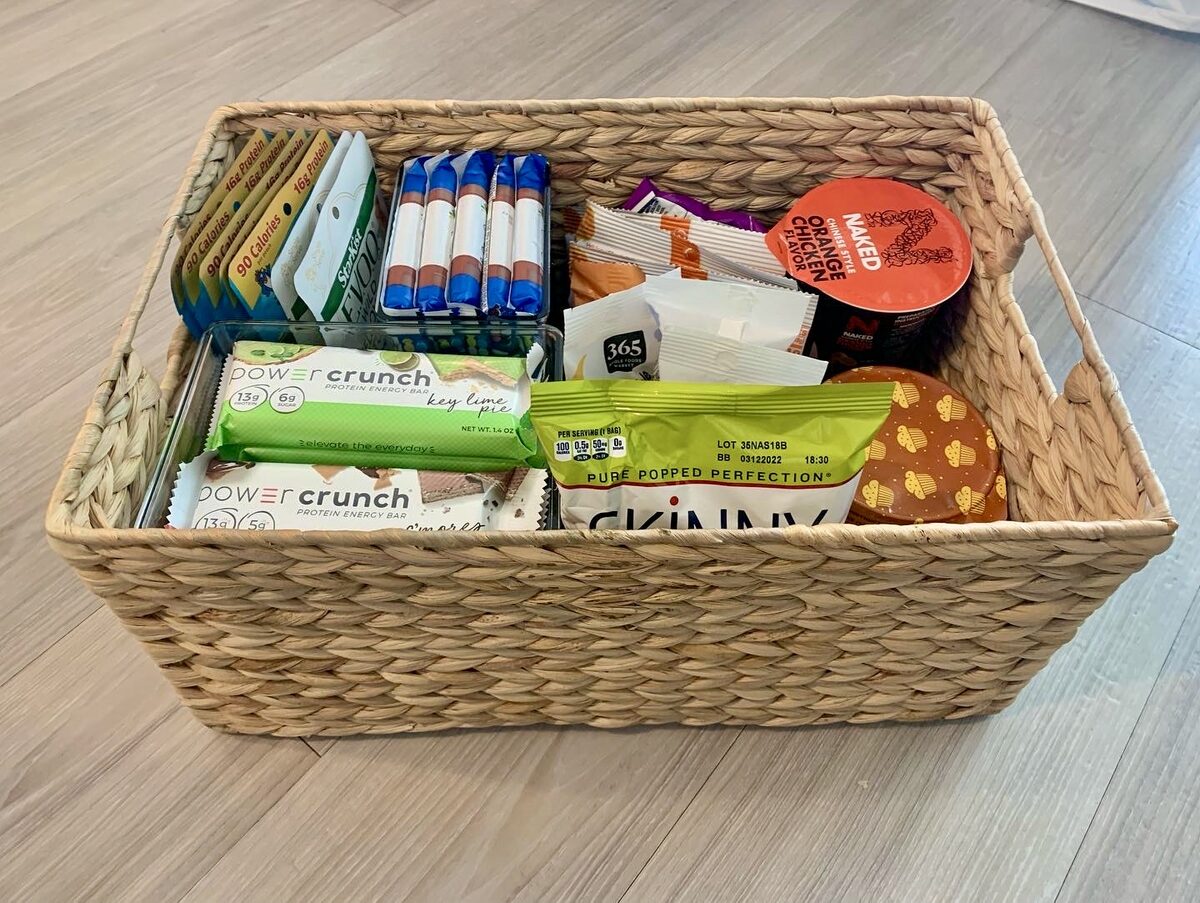
The ADHD brain doesn't move through a space the way those systems expect. It notices what's interesting, ignores what's familiar, loses track of what's out of sight, and burns through hundreds of small decisions per hour — draining the exact executive function reserves the system was counting on. By Thursday, the basket is a pile. By the following Saturday, you're reorganizing again.
"ADHD clients aren't disorganized people. They're people who have been given the wrong tools their entire lives — and told the failure was personal."
This is especially true in Sarasota-area households where life shifts with the seasons — snowbird relatives arrive, schedules change, and garages, pantries, and closets operate differently than they do almost anywhere else in the country. The standard organizing playbook wasn't written for this life.
What ADHD Brains Actually Need From a Home System
The shift that changes everything isn't learning to be more disciplined. It's building a home that doesn't require discipline to maintain. Here's what that actually looks like in practice.
Visibility over concealment
The organizing industry loves a closed cabinet, a lidded bin, a drawer that hides everything away. For ADHD brains, out of sight is genuinely out of mind — not as a metaphor, but as a neurological reality. If you can't see it, it doesn't exist when you need it, and it doesn't register as something that needs to go back when you're done. The homes that hold for my clients in Lakewood Ranch and Siesta Key use clear containers, open shelving where it counts, and systems where the right choice is the path of least resistance.
Friction elimination, not friction tolerance
A system that requires three steps to maintain will be abandoned. If putting something away means opening a cabinet, lifting a lid, sorting into a subcategory, and closing the cabinet — that system has already failed. The most effective ADHD-friendly systems I build have one step. One. Drop it here and you're done.
Reset points, not maintenance routines
Traditional organizing advice says "put it back immediately." ADHD brains often can't — and that's not a character flaw. What works instead is designing spaces with natural reset points. The kitchen counter has a landing zone. The closet has a "pending" hook. The garage has a staging shelf. These aren't failure zones. They're part of the system.
You stop losing an hour every morning to a closet that fights you.
You find things on the first try instead of the fourth.
You stop re-buying things you already own but can't locate.
The house stops requiring effort you don't reliably have on hard days.
Hard days built in
Every system I build for ADHD clients accounts for what I call hard-day capacity. On your best day, you can handle a moderately complex system. But systems only work if they hold on your worst days too — when executive function is depleted, when you're overwhelmed, when the last thing you want to do is sort or decide. A good ADHD system looks almost embarrassingly simple. That's not a flaw. That's the whole point.
Why the Saturday Reorganization Never Holds
Here's the cycle almost every ADHD client describes before we work together: The house builds to a point of overwhelm. One day — usually a weekend — you push through and do a massive reorganization. It feels incredible. For a few days, even weeks, it holds. Then slowly it doesn't. Then quickly it doesn't. Then you're back at overwhelm, this time with the added weight of having tried and failed again.
The reason this cycle repeats has nothing to do with motivation or follow-through. It's structural. The reorganization created a system that requires the same executive function to maintain that made the original system hard in the first place. It's asking the very capacity that's under strain to carry the whole load.
What I do when I work with ADHD clients isn't teach them to organize. It's spend real time understanding how they specifically move through their space — what creates friction, what they'll genuinely never do no matter how good the intention, what their hard days look like — and then design around that instead of against it.
- →We identify where things actually land in your home, not where they're "supposed" to go
- →We build systems that work with your existing habits, not ones that require new ones
- →We account for Sarasota life — seasonal shifts, Gulf Coast humidity, garage heat, visiting family
- →We create hard-day defaults so the system doesn't collapse when life does
- →We make the right choice the easy choice in every space we touch
It's different for every person. That's why a generic system never works — and why this isn't something you can get from a blog post, a Pinterest board, or a Container Store haul.
What My Clients Say After We Finish
Every ADHD client I've worked with — from the Siesta Key condo to the Lakewood Ranch family home to the Venice downsizer — describes the same thing when we're done. Not "I finally learned to be organized." Something closer to: the space stopped fighting me.
That's the real shift. Not a new level of discipline. Not a better label maker. The space itself gets redesigned to work with how their brain actually functions — so maintaining it doesn't require effort they don't reliably have.
"Imagine walking into your kitchen and finding what you're looking for on the first try. Imagine a closet you can put things back into without a pep talk. That's not a fantasy for a different kind of person. That's what a system built for your brain looks like."
I've watched it change mornings. Change the first twenty minutes of someone's day from friction and frustration to something unremarkable — which, for an ADHD brain, is an extraordinary gift.
ADHD Home Organizing in Sarasota: Why Local Matters
Sarasota homes have specific organizing challenges that generic advice ignores entirely. The Gulf Coast humidity warps cardboard systems. Garages here aren't functional storage — they're heat traps that require different materials and a completely different approach. The snowbird cycle means many households double in population seasonally, requiring flexible systems that absorb visiting family without collapsing. Siesta Key and Longboat Key condos have spatial constraints that demand ruthless prioritization of what stays and what goes.
As a professional organizer with fifteen years of experience, I've worked in homes across Sarasota County — Lakewood Ranch, downtown Sarasota, Venice, the barrier islands — and I understand these nuances in a way a national organizing framework never will. The systems I build are built here. For this heat. For this life. For this brain.
If Your Home Has Been Asking Too Much of You
If you've been cycling through reorganizations that don't hold, you're not behind on learning a skill. You're waiting for a system that was actually built for you. Book a free discovery call — Kim will be in touch within 24–48 hours.