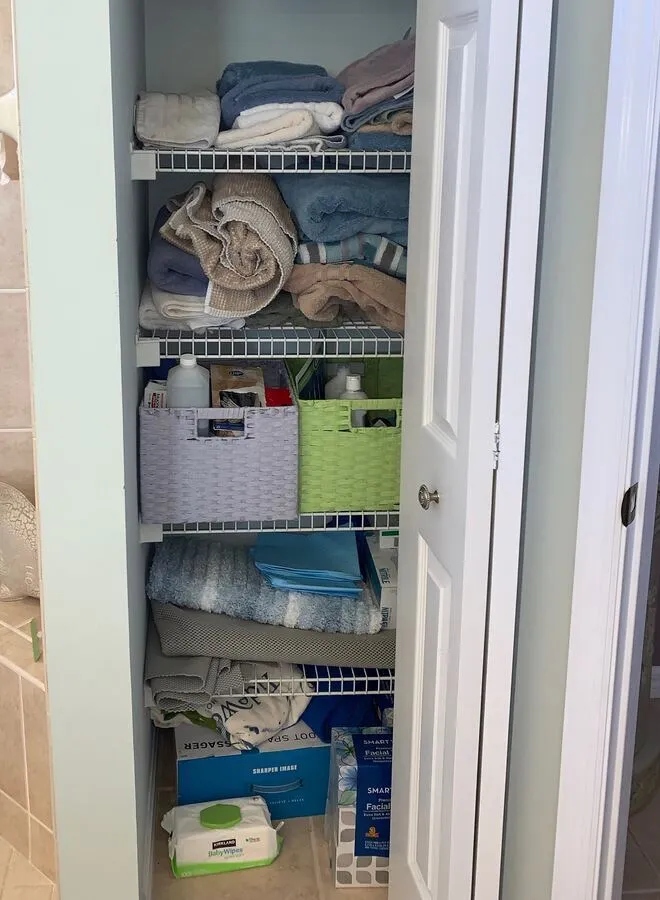
ADHD Home Organizing: When Your System Asks Too Much
The bins may be fine. Look at what it takes to use them on a tired day.
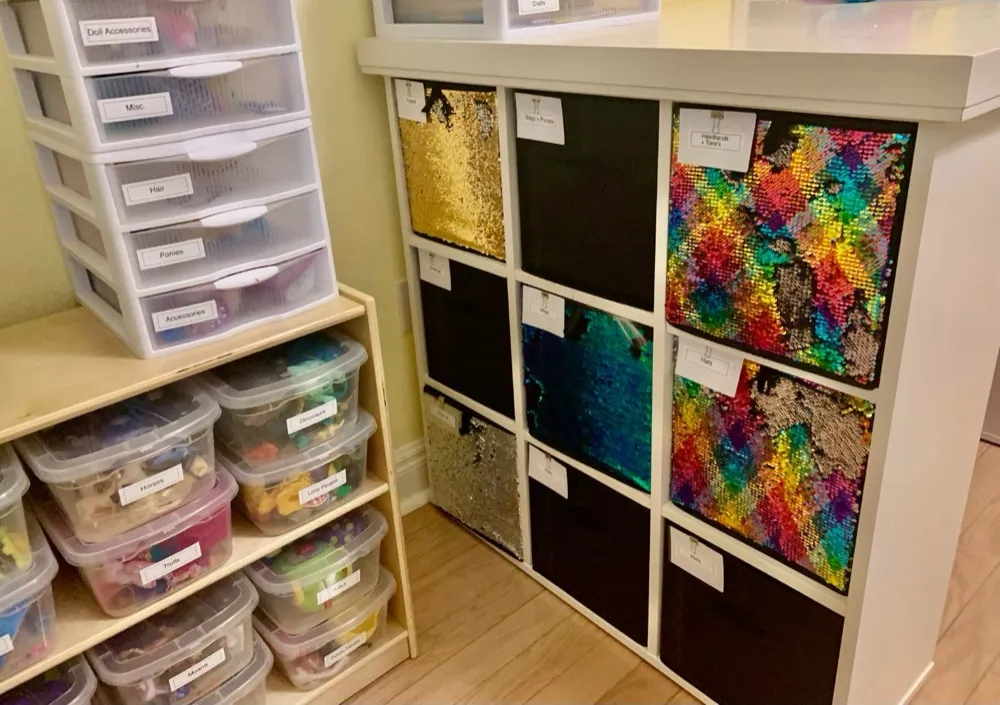
You cleared the kitchen counter on Saturday. You sorted the things that had been waiting. You gave them places in the new bins.
For a little while, it felt easier.
Then the charger stayed beside your cup. A bag landed on the counter. By Thursday, you were moving things out of the way again.
It can feel like evidence against you. You already did this. Why are you back here?
If you live with ADHD, the effort a system asks of you matters. And if you live with depression or other mental health challenges, the energy available for that effort may change too. Your home needs care through those changes, not only on a Saturday when you have time.
Before you start over, I want you to look at one thing that came back.
What does the charger show you?
Where did you put it when you finished using it? And where had you decided it belonged?
Perhaps its bin is inside a cabinet, behind something else, with a lid to lift. The counter is beside the place you charge your phone. One choice is close. The other asks you to stop and move three things.
The charger is showing you the difference.
That doesn't mean every cabinet or lid is wrong. It means this particular home for this particular thing may be asking more than you can comfortably give it.
A recurring pile can tell you where to look. You don't need to turn it into a verdict on your character.
Visibility has to fit you, too
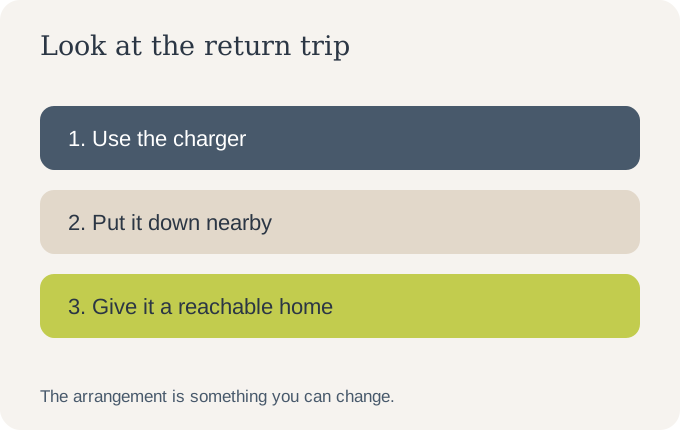
You may find it easier to remember something when you can see it. An open tray or clear container might help. But seeing every item at once can also feel like too much.
You don't have to choose between forgetting what you own and looking at everything all day.
A shallow drawer with separated categories may be easier to use than a deep open basket. A label on an opaque bin may give you the reminder you need without showing every small thing inside.
Notice your response. Can you find the charger? Can you return it? How does the space feel when you sit beside it?
Your attention and your senses both belong in the decision.
Give the in-between things somewhere to go
Some belongings aren't ready for their final step. The cardigan has been worn, but doesn't need washing. The bag will go out with you again tomorrow.
Without a place for that stage, the nearest chair or counter takes the job.
A hook for the cardigan might help. A defined landing spot for the bag might be enough. It is part of your system, not a place to hide a decision forever.
Then connect returning to that spot with a moment you already recognize: getting changed, coming home, or closing the kitchen for the evening. Choose something you can return to after a missed day.
Try one change before another whole-home reset
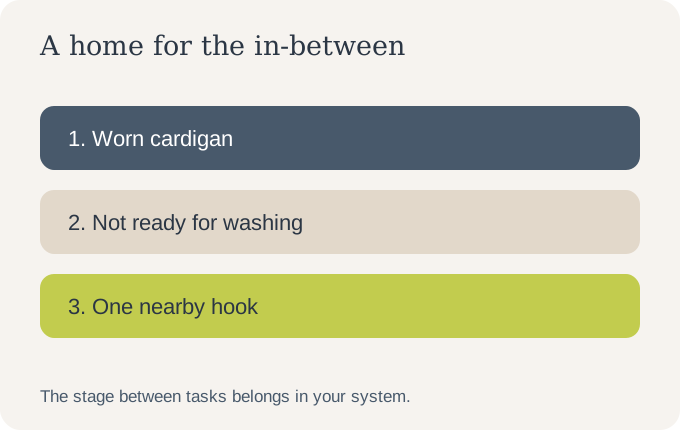
- Choose one item you keep hunting for. The charger, keys, or pair of scissors. Leave the rest of the house out of this decision.
- Follow its use. Notice where you reach for it and where you put it down. That is useful information about where its home could be.
- Make returning it easier. Move an obstacle, change the container, or bring its home closer. You may already own what you need.
- Try it on an ordinary day. If it still asks too much when you're tired, change the arrangement. You are learning what the space needs.
The aim isn't a home that never needs attention. You live here. Things move.
The aim is to understand your system well enough to care for it, and to find your way back when life changes.
You can begin with understanding
I teach the why because a place makes more sense when you understand the reason behind it. That gives you something to work with when your days change.
You don't need another kitchen-wide project today. One charger can show you something worth knowing.
If you'd like a gentle place to begin, my free five-day Home Organizing Starter Course walks you through seeing your space and choosing a starting spot. Nothing to buy or sort before you begin. You can read the emails from the couch, on your phone.
— Kim