Body Doubling for Organizing: Someone With You on Video, and a System You Keep
What it is, why it can help us begin, and what changes when the hour also gives us a clear next step and a system we keep.
Picture this.
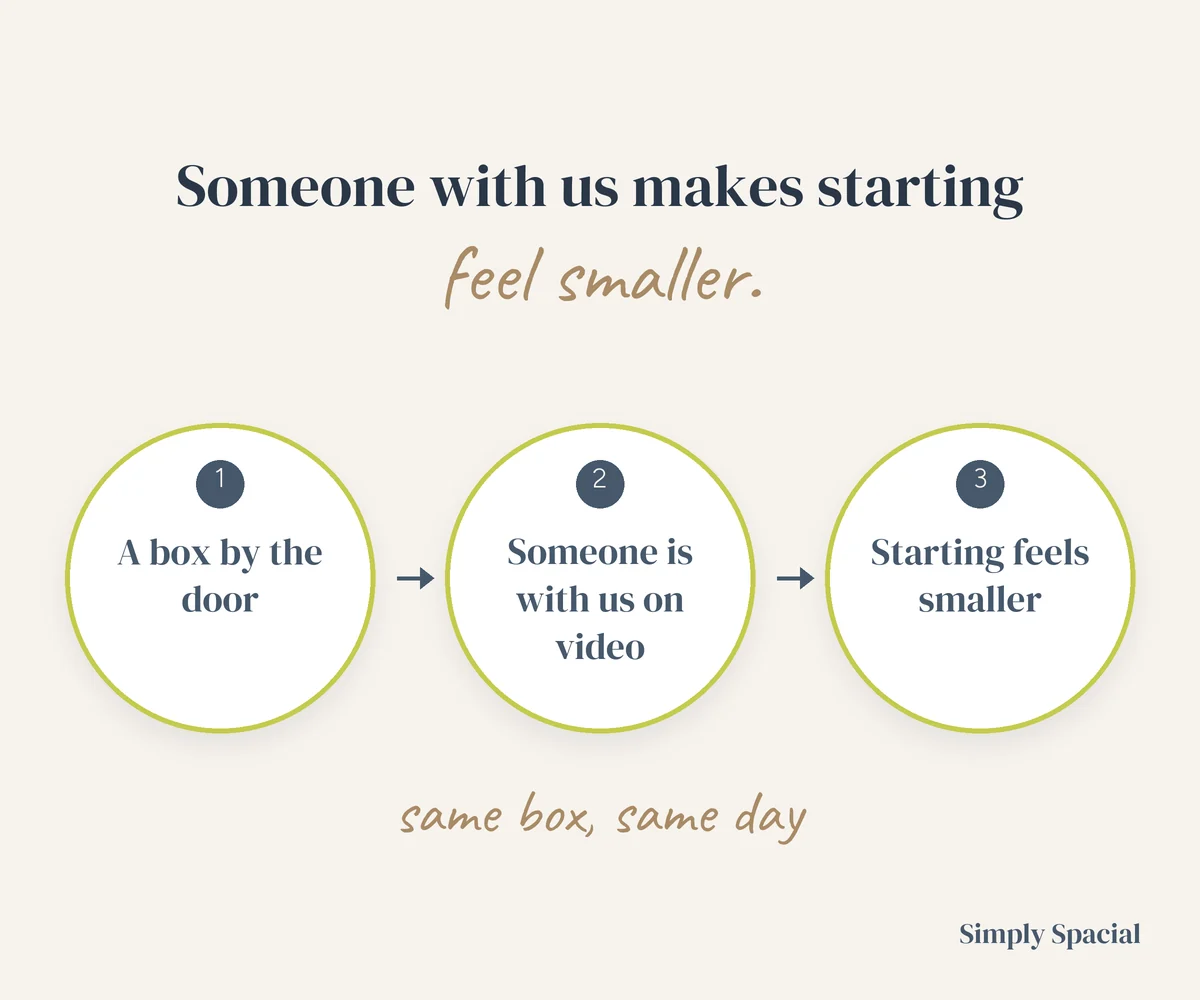
There's a box by the door. We've meant to sort it for weeks.
We walk past it. We feel that small drop in the stomach. I should be able to do this.
So we tell ourselves we'll start tomorrow. Then tomorrow is a low-energy day, and the box is still there.
If that sounds familiar, I want to say something first. The box isn't a verdict on us. Things drift, piles grow, and the systems we were handed were built for a different kind of mind. That's physics, not character.
What body doubling is
Body doubling means working on a task with another person present. They aren't doing it for us. They're simply there.
Many people with neurodivergence tell us the same thing. It's easier to start when someone else is in the space, even quietly, even on a screen. Starting is often the hardest part, and company can make it feel smaller.
I can't promise it works the same way for everyone. But if you've ever found it easier to fold laundry while a friend sat nearby, you already know the feeling.
Why presence alone isn't always enough
Maybe you've tried this already. A friend came over. A video call with the camera on. It helped for an hour.
Then the hour ended, and the system went with it.
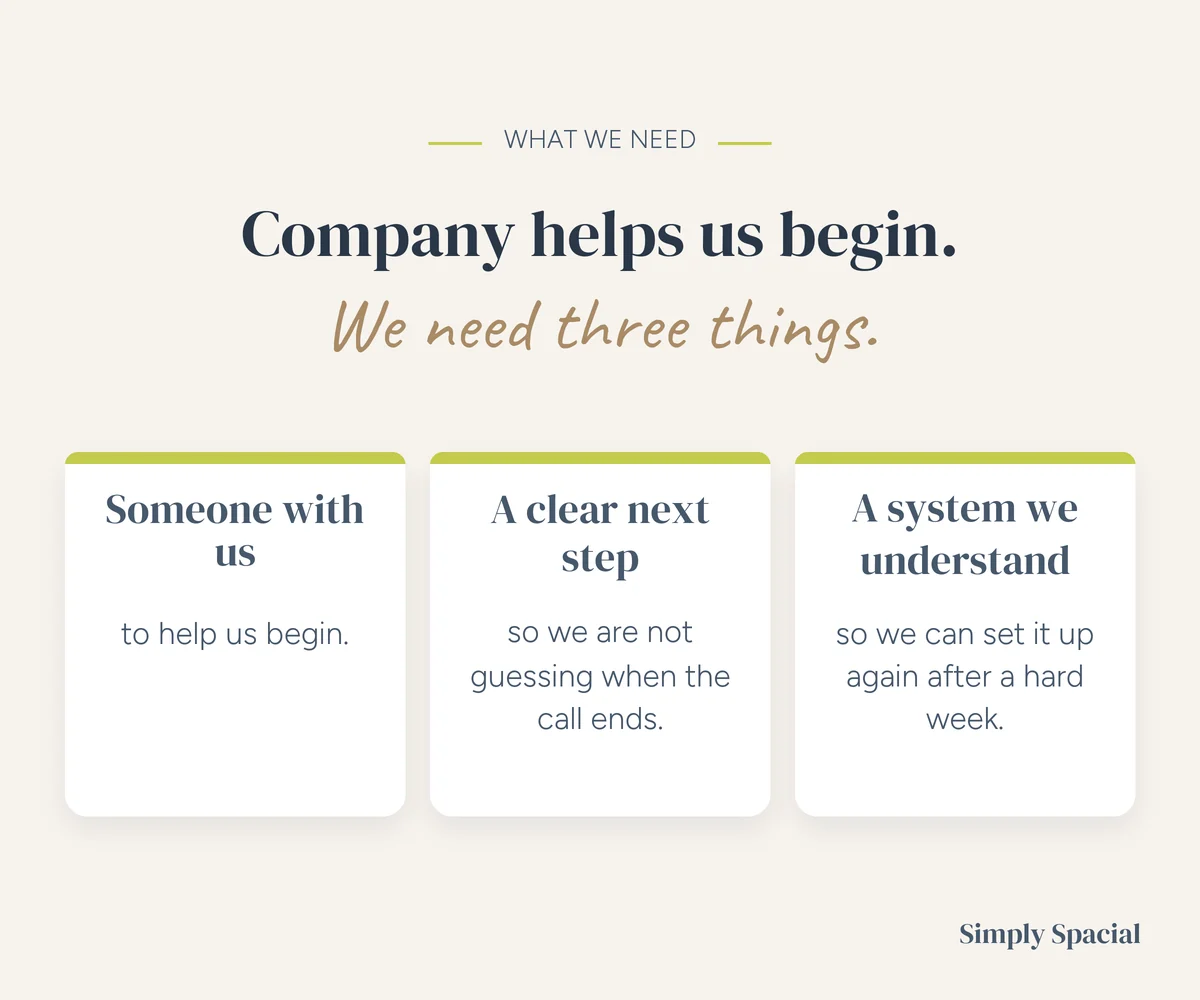
That's the gap. Someone beside us helps us begin. But company is only one part of what we need.
We also need to know the next step, so we aren't left guessing when the call ends. And we need a system we understand, with the reasons behind it, so we can set it up again after a hard week.
If you've already built systems of your own, you know this. You're capable. You've tried. You don't need another bin. You need someone with you while you work, a clear next step, and a system that becomes yours.
What changes with the Jump-start hour
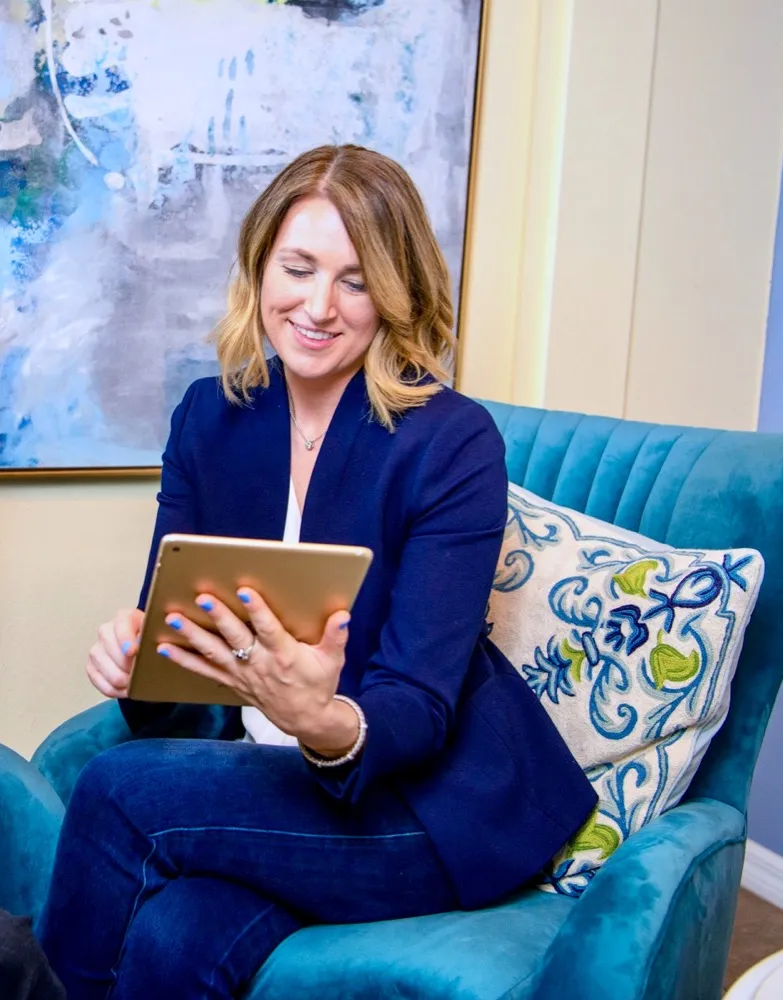
Here's what I do, live, on video:
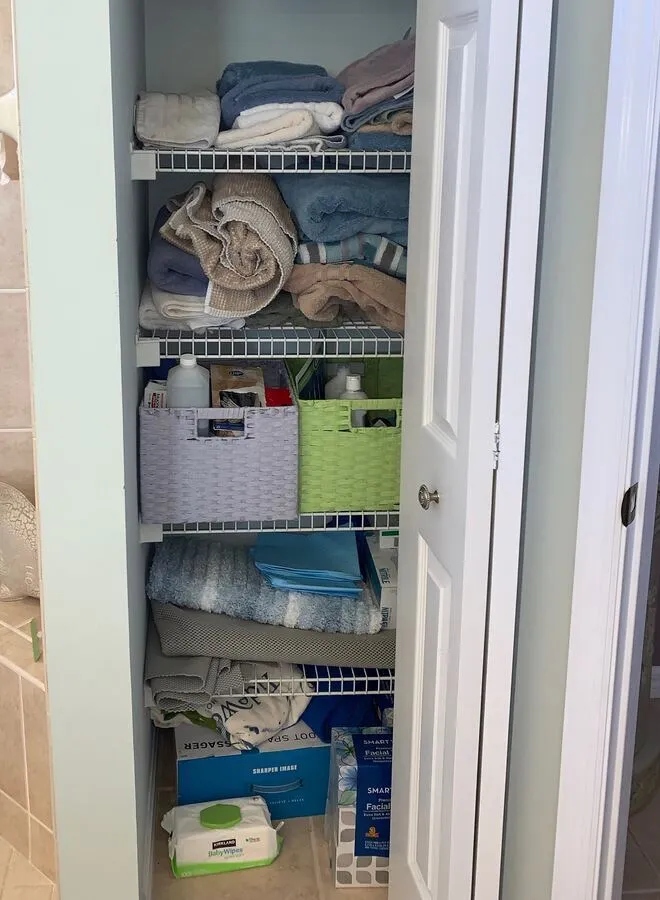
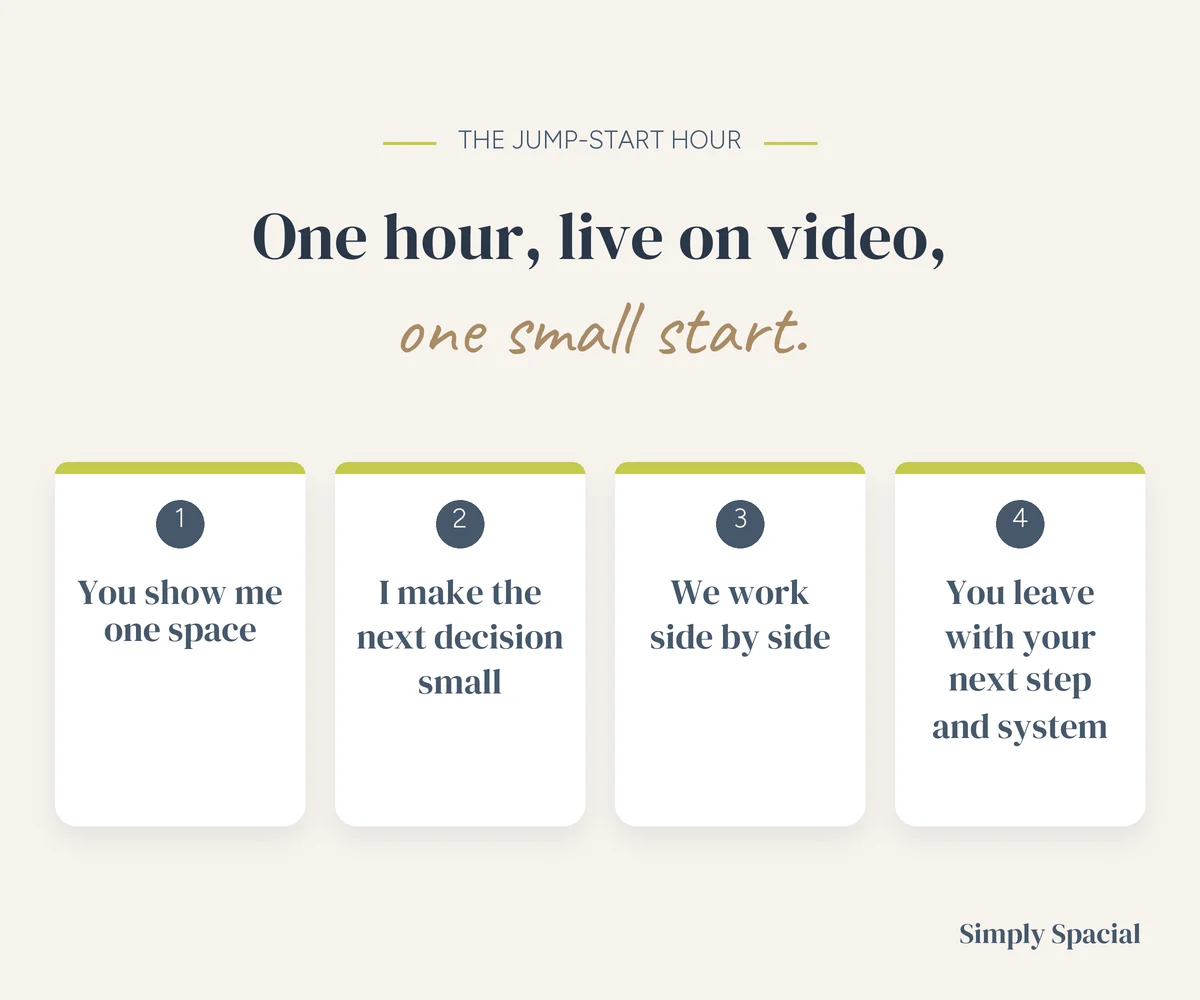
- You show me one space. The shelf, counter, closet, or corner that's weighing on you most, exactly as it is today. Nobody comes into your home, and I don't judge it. Every pile is information.
- I make the next decision small. We look at how you use the space and choose one place to start. Not the whole house.
- We work side by side. You move things. I stay with you and explain why each choice works, so you can do it again without me.
- You leave with your next step and your system. The next step is already decided. And you've learned the Simply Spacial Method™, the system and the why behind it, with an overview to keep.
So the hour is more than company. I'm with you while you work, we choose the next step together, and I teach you the system so you can keep going without me.
What one hour will not do
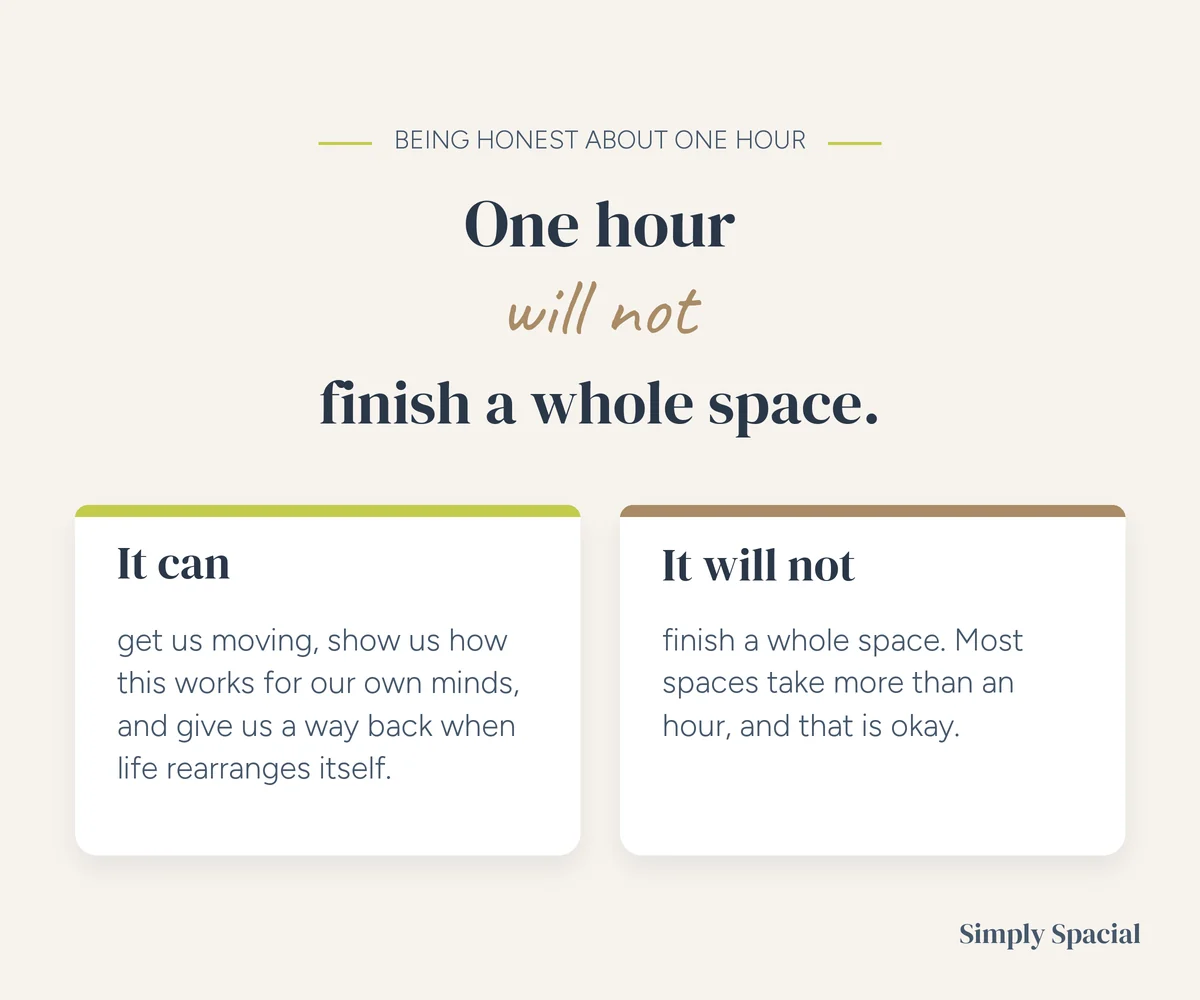
It won't finish a whole space. Honestly, most spaces take more than an hour.
What it can do is get us moving, and show us how this works for our own minds. It also gives us a way back when life rearranges itself.
That's because we leave with two things. We have the system, so we know how to return to it. And we have a clear next step, so we know where to pick up. A hard week doesn't send us back to the start.
You also stay in charge. You decide what stays and what goes. I'll never rush you.
Why this can help us relax
When a space asks us to hunt, decide, and remember all day, our mind and body stay on alert. A space with a home for each thing asks less of our nervous system. That's when the mind and body can start to relax.
It's one reason I teach the why. A system we understand is easier to come back to.
Who this is for
Anyone who wants company and a clear plan, and doesn't want a stranger in their home. If you feel overwhelmed, or ashamed that you haven't managed this alone, you're welcome here. You don't need to be ready, or organized, or sure where to begin. Choosing the starting point is part of my job.
I've spent 15 years organizing more than 500 homes in person. I'm neurodivergent, and I live with mental health challenges. What I teach is lived, not just learned.
All you need is a device with a camera and the space you'd like to work on.
Caring for our space is one way we care for ourselves. Let's start with the box by the door.
— Kim
Questions people ask
What is body doubling for organizing?
Working on a task with another person present. They aren't doing it for us. They're simply there, and for many people with neurodivergence, company makes starting feel smaller.
What do I leave the Jump-start hour with?
A clear next step that is already decided, and the Simply Spacial Method™: the system and the why behind it, with an overview to keep.
Will one hour finish my whole space?
No. Most spaces take more than an hour. The hour gets us moving, shows us how this works for our own minds, and gives us a way back when life rearranges itself.
Does anyone come into my home?
No. It's live on video. All you need is a device with a camera and the space you'd like to work on.