Start With Your Own Space: A Neurodivergent Mom's System Comes First
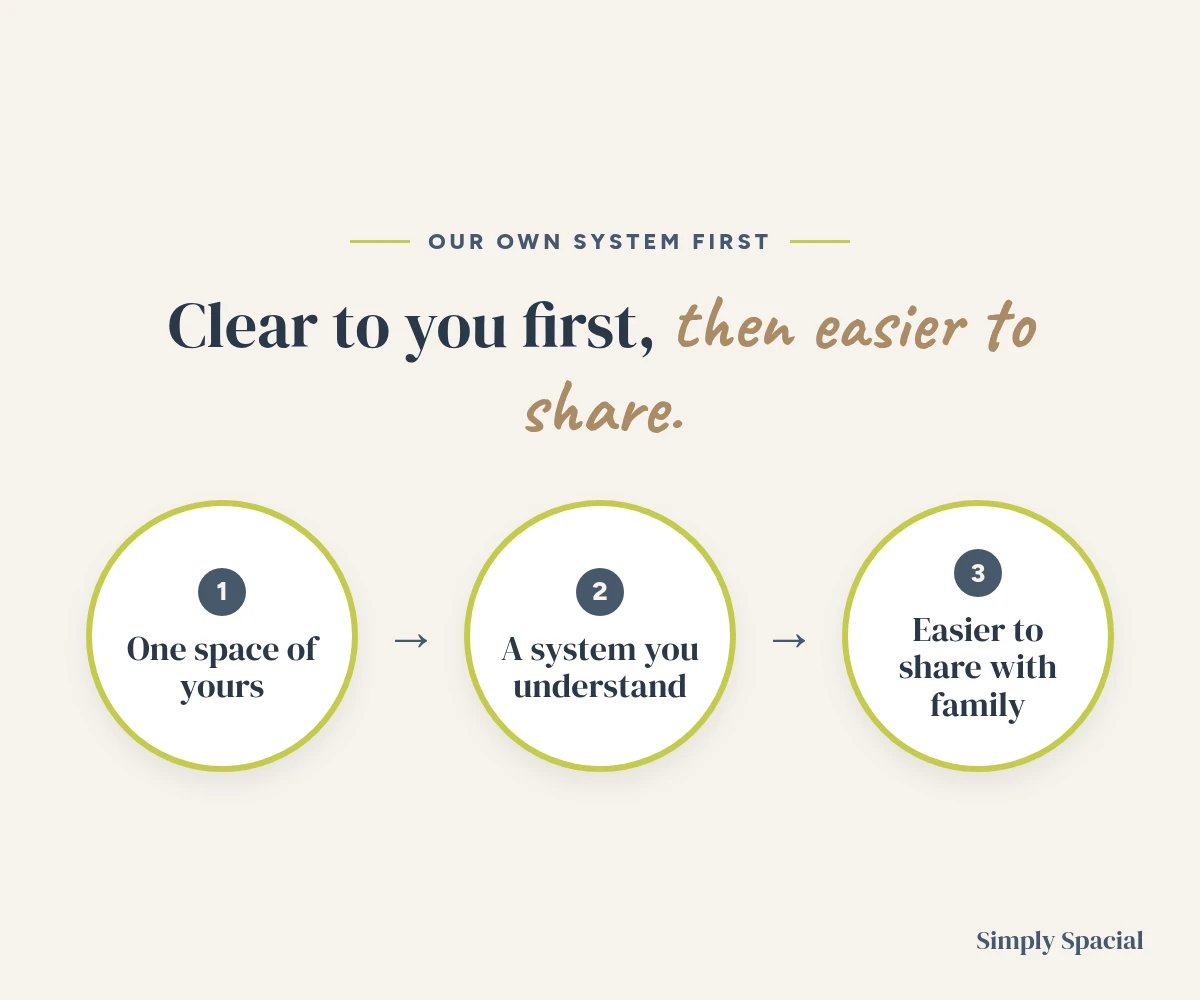
Learn your own system first, in one space of your own. Once it's clear to you, it's easier to share with your family.
The short answer: If you're a neurodivergent mom and your home feels like too much, start with one space that is only yours. Learn the system behind it, and learn why it works. Once it's clear to you, it's easier to share with the people you live with.
Picture this.
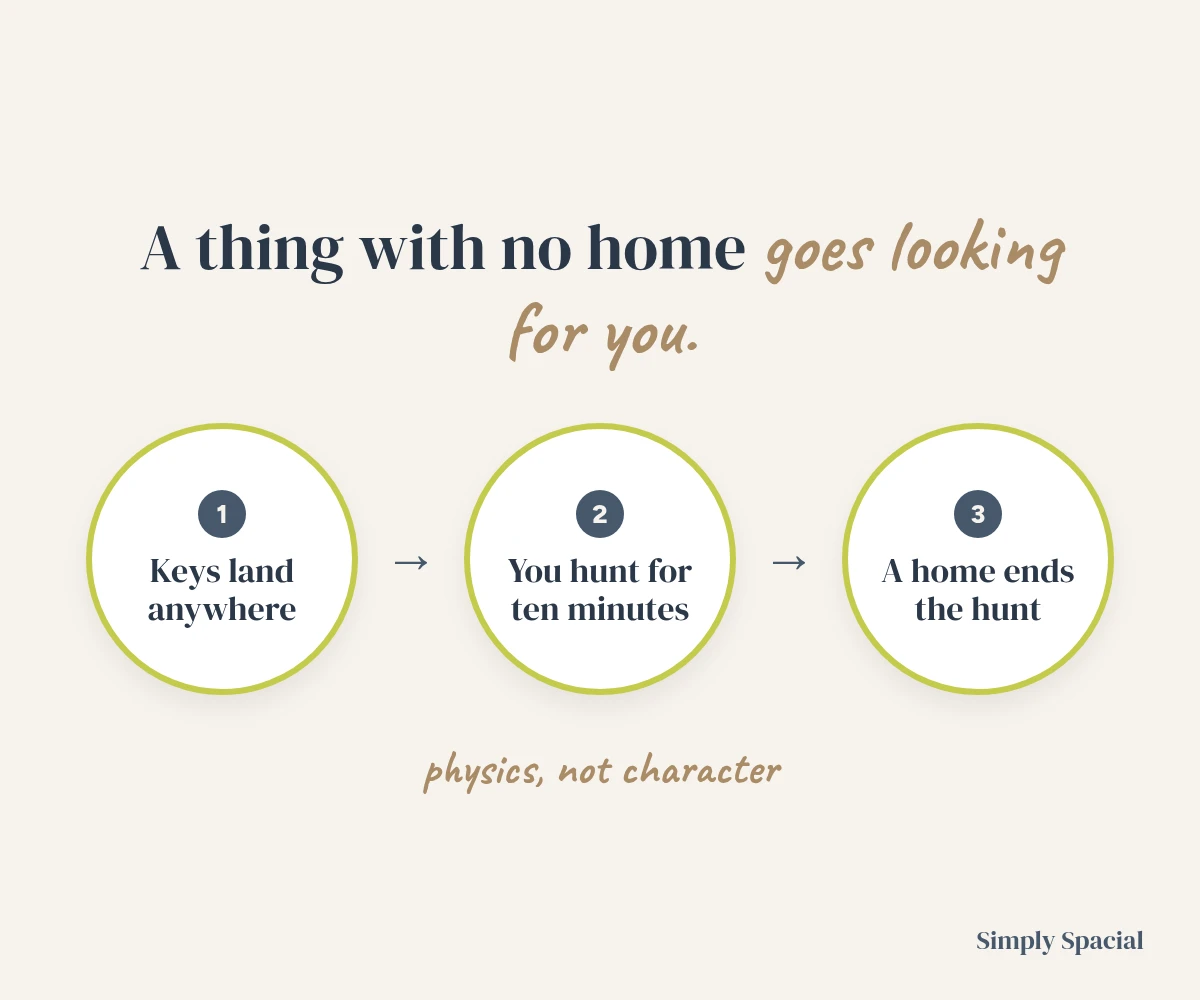
You can't find your keys. Again.
You check the counter, then the bag, then the coat pocket. Ten minutes go by. You feel that small drop in your stomach. I'm the one who's supposed to have this together.
Then you find them in yesterday's coat, and the morning is already behind.
If that sounds familiar, I want to say something first. The keys aren't a verdict on you. A thing with no home goes wherever you last set it down. That's physics, not character.
Why does your own system come first?
When you're the one holding the house together, you put everyone else first. That makes sense. But a system that lives only in your head is the hardest kind to share.
Here's a small example. The house has one pair of scissors and no set place for them. You set them down wherever you used them. Your son can't find them for a school project, so he asks you. Dad needs them next, and nobody knows where they ended up, so he asks you too.
It's small, but it happens all day. When one thing has a home, everyone has less to hunt for, and the questions stop landing on one person.
That home has to make sense to you first. Once it does, it's much easier to show someone else.
This starts with yours, only yours.
How do you pick one space to start with?
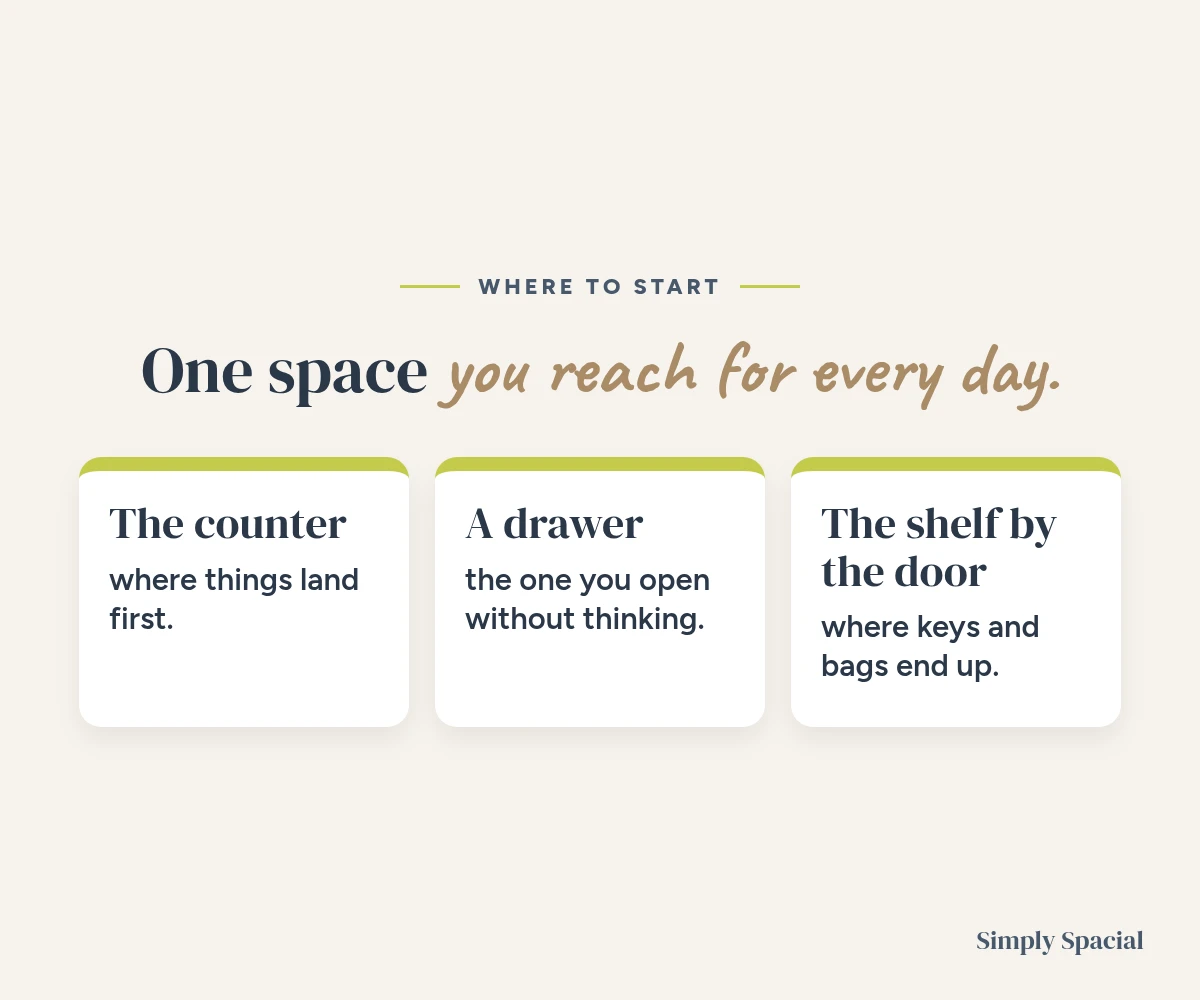
Not the whole house. One space you reach for every day.
- Choose a space you use daily. A counter, a drawer, the shelf by the door. Somewhere you touch without thinking.
- Look at where things land. The pile isn't a failure. It's information. It shows you where something stops having a place.
- Give one thing a home. Pick the item you hunt for most, and choose a spot you can reach without moving anything else.
That's enough for a first day. If you'd like to see how piles work, Why Clutter Keeps Coming Back: The Physics Behind the Pile goes deeper.
Why does the "why" matter more than the "what"?
A tip tells you what to do. A system tells you why it works.
Tips are easy to lose on a hard week. A system you understand is easier to come back to, because you know what to adjust when life rearranges itself.
That's why I teach the why, not only the steps. You may have tried advice built for a different kind of mind. It asked for more time, memory, and energy than you had.
What can one live video hour do for your space?
The Jump-start hour is one hour, live with me on video. Here's what I do:
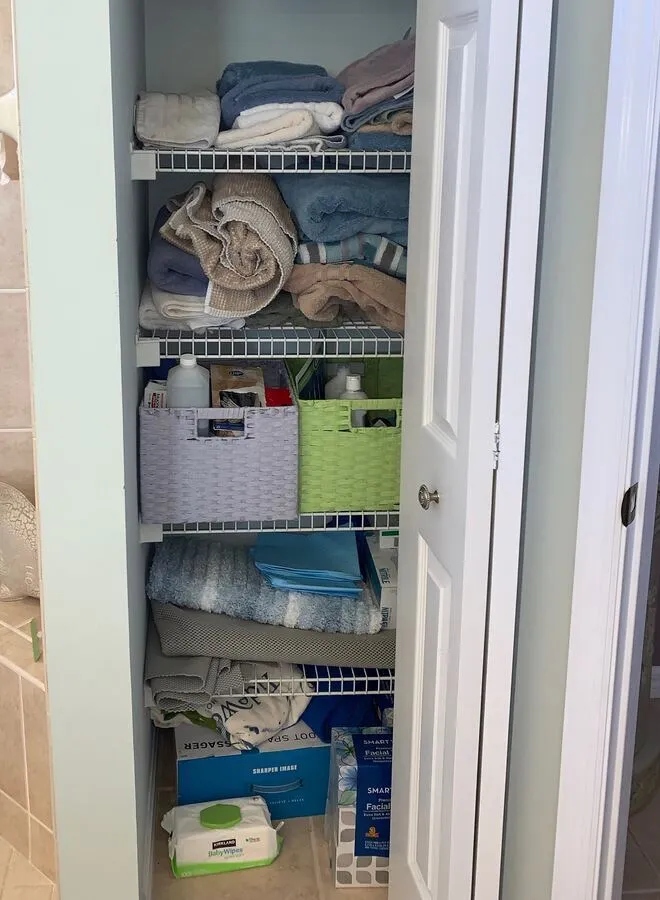
- You show me one space of your own. The shelf, counter, drawer, or corner weighing on you most, exactly as it is today. Nobody comes into your home, and I don't judge it.
- I make the next decision small. We look at how you use the space and choose one place to start.
- We work side by side. You move things. I stay with you and explain why each choice works, so you can do it again without me.
- You leave with your next step and your system. The next step is already decided. And you've learned the Simply Spacial Method™, the system and the why behind it, with an overview to keep.
It won't finish a whole space. Honestly, most spaces take more than an hour. What it gives you is a clear start, a system that's yours, and a way back when life rearranges itself.
You also stay in charge. You decide what stays and what goes. I'll never rush you.
Who is this for?
Moms with ADHD, autism, or other neurodivergence who want to feel steadier in their own space. If you feel overwhelmed, or ashamed that you haven't managed this alone, you're welcome here. You don't need to be ready, or organized, or sure where to begin. Choosing the starting point is part of my job.
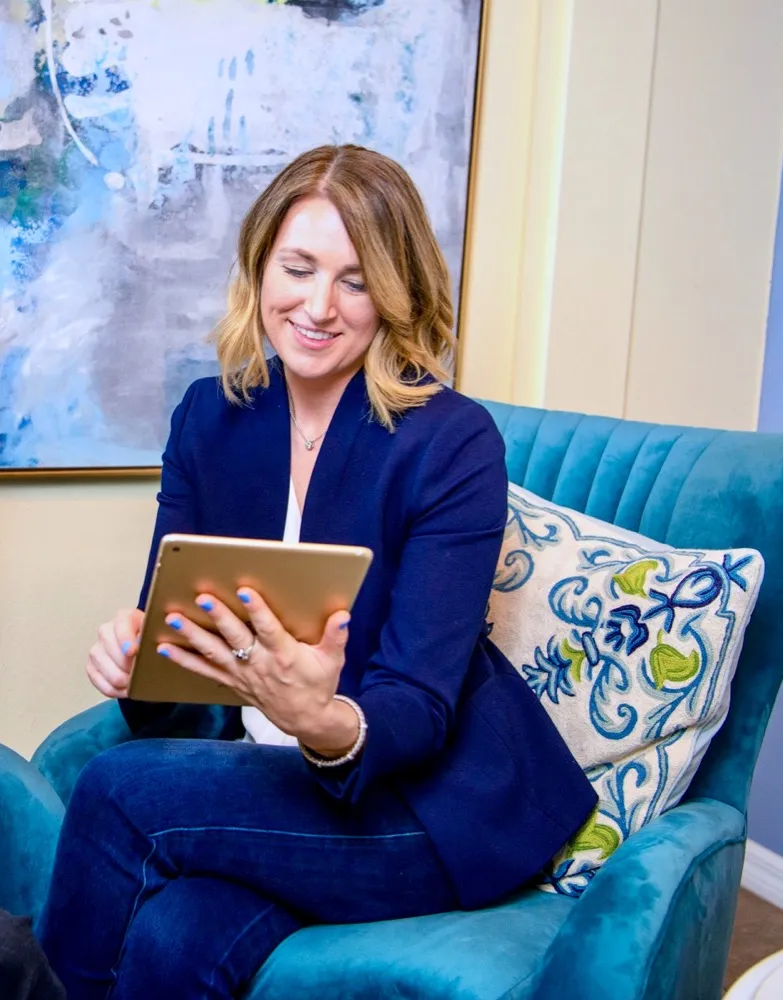
I've spent 15 years organizing more than 500 homes in person. I'm neurodivergent, and I live with mental health challenges. What I teach is lived, not just learned.
All you need is a device with a camera and the space you'd like to work on.
Caring for your space is one way you care for yourself. And a system that's clear to you is something you can share. Let's start with one shelf.
— Kim
Questions people ask
Why start with my own space instead of the whole house?
A whole house is too many decisions at once. One space you use daily is small enough to finish a first step, and it teaches you the system you can use everywhere.
Do I need to organize everything before I share a system with my family?
No. Once the system is clear to you in one space, it's easier to explain to others. You start with yours.
What do I leave the Jump-start hour with?
A clear next step that is already decided, and the Simply Spacial Method™: the system and the why behind it, with an overview to keep.
Does anyone come into my home?
No. It's live on video. All you need is a device with a camera and the space you'd like to work on.