Executive Dysfunction and Your Home: Why Organizing Advice Keeps Asking You for the One Thing You Don’t Have
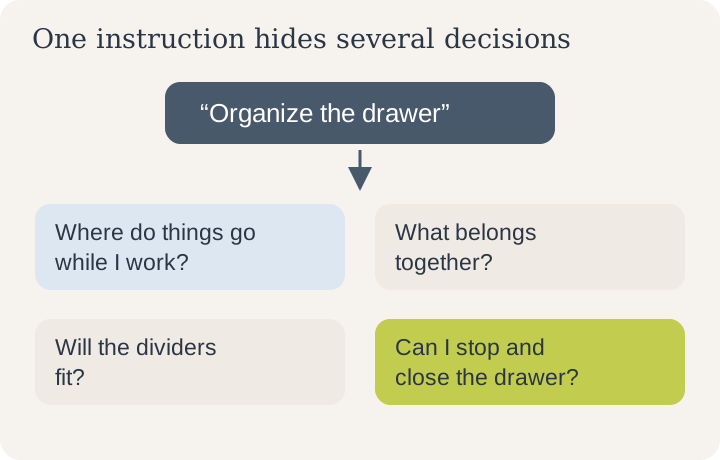
“Organize the drawer” is not one action. You can make the hidden decisions visible without asking yourself to finish them all today.
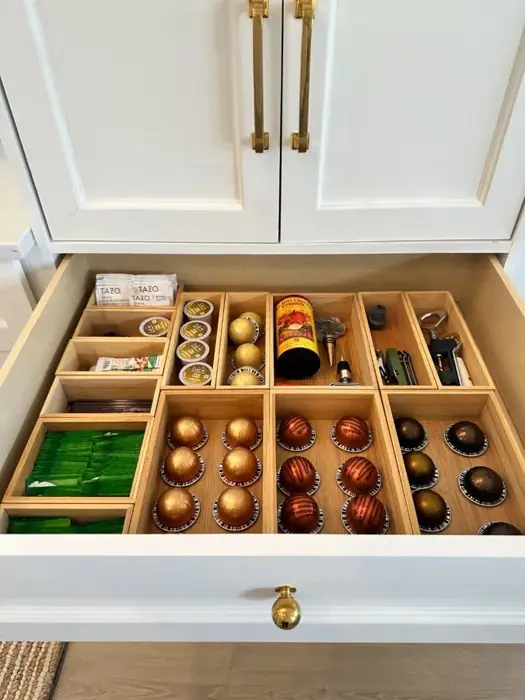
You open the coffee drawer and think, I need to organize this.
Then you close it.
You can picture the drawer you want. You may even know which dividers you like. But the space between that picture and moving your hand feels much larger than the advice makes it sound.
“Start with a drawer” is smaller than “organize the kitchen.” It can still be a very large instruction.
When getting started, deciding what comes next, or keeping track of the steps is difficult, another instruction to organize can ask for the very thing you are having trouble accessing.
A drawer is a place. Organizing it is many decisions.
Where will the contents go while you work? Which things belong together? What happens to the item you don't recognize? Do the dividers fit? How will you put everything back if you need to stop?
Those questions can be hiding inside one short sentence.
Executive dysfunction is a term used for difficulties with the processes involved in managing tasks, such as planning, beginning, and keeping the steps in view. It isn't a verdict about how much you care about the result.
This article can't tell you why those difficulties are happening for you. It can help you look at what an organizing task is asking, and whether some of that demand can be taken out of the task.
Make the next action something you can see
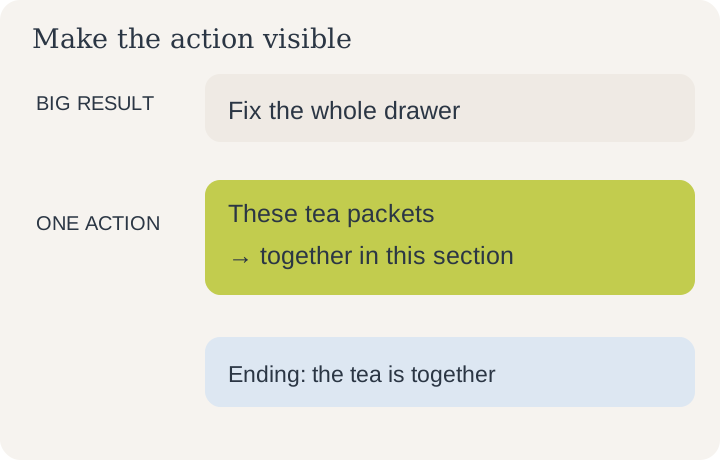
“Fix the coffee drawer” leaves you with a whole project to interpret.
“Put the tea packets together in this section” names an action, the belongings, and a place. You can see what the instruction means. You can also see when that one action is done.
It may still be difficult. Making an action clearer is not a guarantee that your capacity will appear. But it removes some of the work of translating an idea into a starting point.
Try describing the next movement rather than the finished result. Not a beautiful drawer. These tea packets, here.
You don't need to make a written plan for the whole kitchen to use that distinction.
Choose the stopping place before the starting place
Emptying the whole drawer gives you more to manage immediately. If your energy changes halfway through, the drawer and the counter can both become harder to use.
You can leave most of it where it is.
Choose a small group that can stay together if you stop. Move the tea packets into one available section or a container you already have, without spreading the rest of the contents across the counter.
The stopping point is not a deadline. It's a way to keep your home usable while you work.
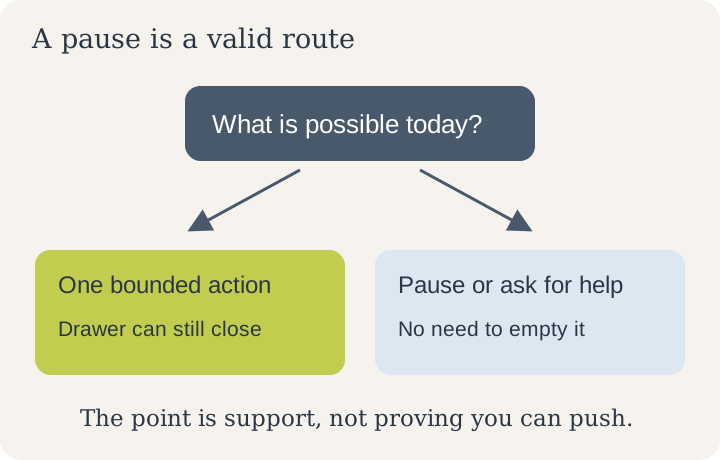
If even that would ask too much today, you don't have to begin. Noticing the first decision can be information for another day or something you ask someone to help you with.
Match the action to today, not your most capable day
- Name the hidden question. Are you unsure what belongs here, where to put things during the work, or how to stop without leaving more out?
- Choose one visible action. If you have capacity, gather one familiar group without emptying the whole drawer.
- Give that action an ending. The tea is together and the drawer can close. You do not owe the rest of the drawer your attention now.
- Allow another kind of support. Ask for help choosing the step, leave the task for another time, or choose a smaller focus. You don't need to earn support by starting alone.
A timer may help you, or it may add pressure. A list may help, or making the list may be another task. You get to notice which supports are useful instead of treating every suggestion as a requirement.
Support doesn't have to become another project
Sometimes help means having someone work out the next decision with you. Sometimes the useful first step is understanding why the instruction feels so large.
My free five-day Home Organizing Starter Course is an option for that second kind of start. You can read the email lessons without buying containers or sorting anything first. They walk you through seeing your space, choosing a starting spot, and understanding a way back when things drift.
If live help becomes useful later, a $150 Jump-start hour gives you one hour with me on video, guidance as you work on a manageable focus, the Simply Spacial Method™ PDF overview, and a clear next step. It isn't a promise to finish a whole space or remove executive-function difficulties.
For now, the drawer can stay closed while you decide what kind of support you want.
— Kim