Organizing for Autistic Adults: How to Build a Home That Stops Asking So Much of You
A home can make sense to someone else and still be difficult for you to use. Your experience belongs in the design.

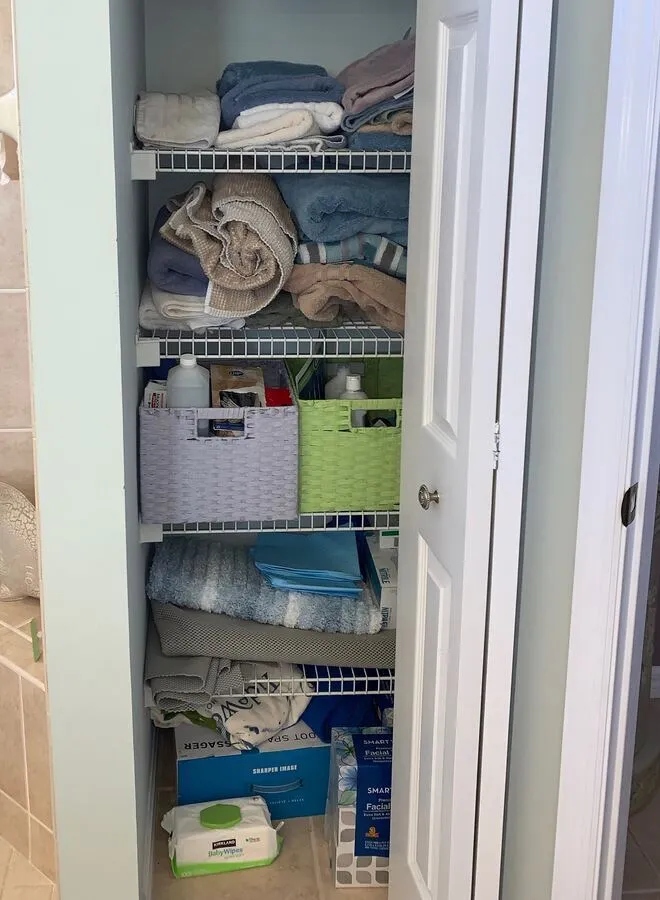
You reach into the bathroom cabinet for the thing you use every evening.
It has moved.
Someone was trying to help. The basket looks organized. But now you have to open another container, look behind the bottles, and work out where your familiar routine went.
A space can look better to someone else and become harder for you to use.
If you're an autistic adult, you get to be part of deciding what support looks like in your own home. That includes what stays where it is, what changes, and how much change feels possible at once.
Start with your experience, not an autism checklist
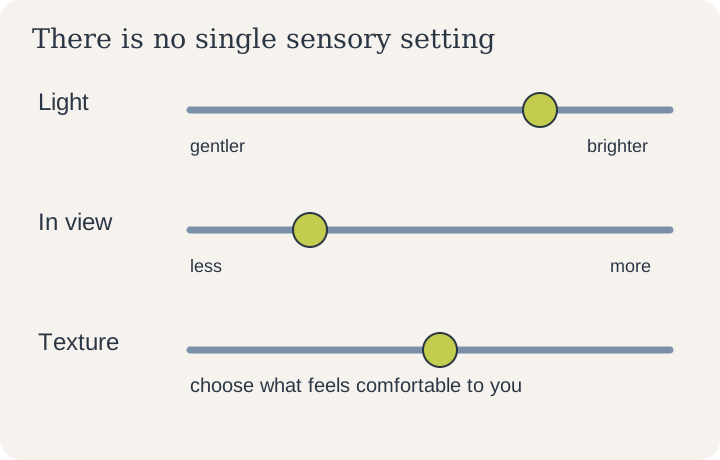
There isn't one sensory setup that fits every autistic adult. You may want more light to see clearly. Someone else may find that same light uncomfortable. You may enjoy having favorite objects in view, while wanting the rest behind a door.
Neither home is the correct autistic home.
Begin with a particular moment. Opening the cabinet. Getting dressed. Coming home and putting your bag down. What does that moment ask of you?
Notice the reach, the sound of the door, the texture you touch, and how easy it is to find what you came for. You don't need to change every sensory detail. Choose the one that matters to you.
Keep the parts you depend on recognizable
A consistent place can mean one less thing to work out. If the item you use every evening stays in the same reachable spot, you don't have to search before beginning.
That doesn't mean everything in your home has to stay unchanged. It means a change can be planned around what you rely on.
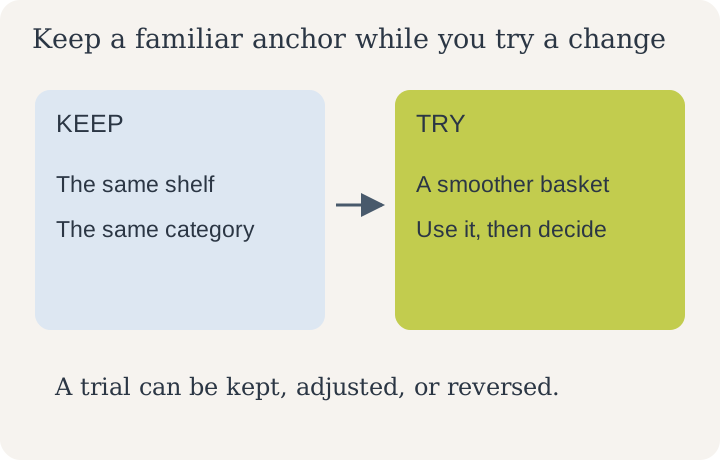
If you want to try a new basket, you might keep the location the same. If you need to move the location, you might keep the category together and decide how you want to mark its new home.
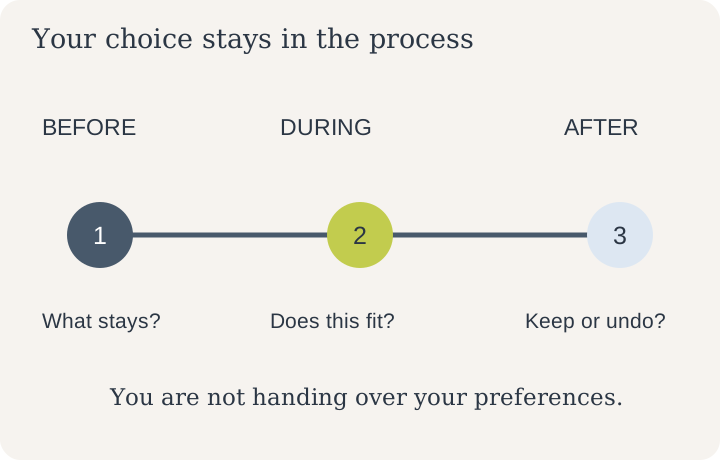
You can make one change, use it, and decide whether it helps before changing another part.
You are allowed to prefer the old arrangement. A trial gives you information; it doesn't take away your choice.
Being organized includes being able to use it
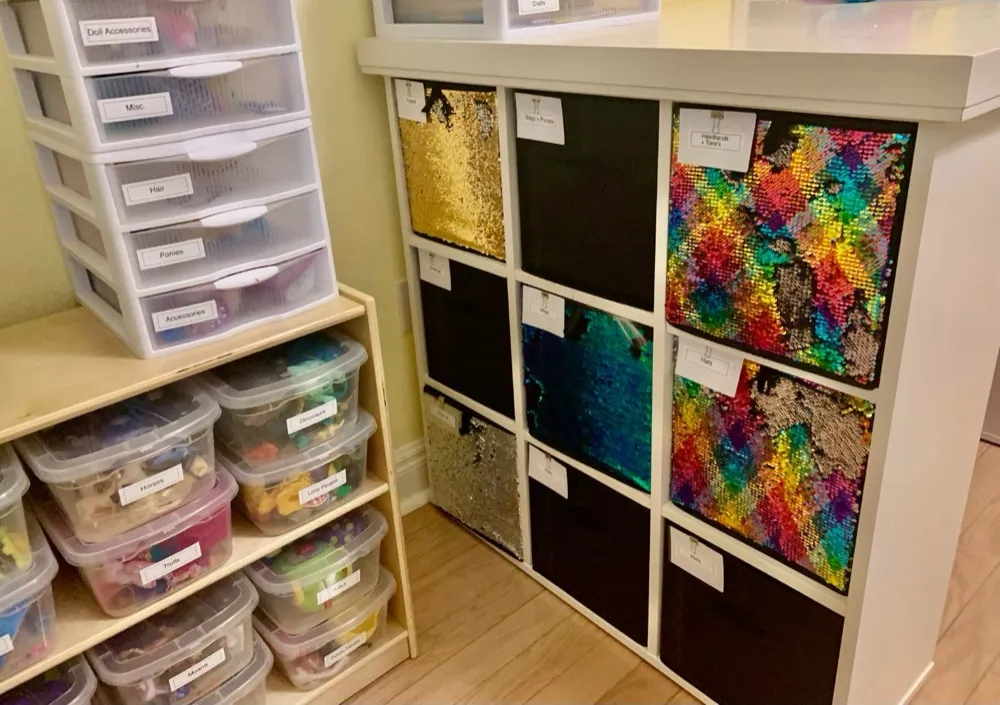
A basket can keep a category together and still be wrong for the task. Perhaps it is rough to touch. Perhaps it hides the small bottle you need. Perhaps it is too full to lift comfortably.
The label doesn't cancel those difficulties.
You might prefer a smooth container, an open section of the shelf, or a drawer with clear separation. You might prefer to see the label but not every item inside. The useful question is what makes finding and returning the item comfortable for you.
There is no requirement to add scented products, remove favorite colors, or make the space look minimal. Organizing is meant to support your life, not replace your preferences with someone else's picture of calm.
Try one agreed change
- Choose a moment that asks too much. Describe what happens when you open the cabinet or reach for a familiar item.
- Name what you want to keep. The location, the category, the visible reminder, or a favorite object. Make that part of the plan.
- Choose one change you want to try. Change the container, the reach, or another physical detail. You don't have to change all three.
- Decide how to review it. After you use it, notice whether it is easier. Keep, adjust, or reverse the change. You get a say at every point.
If you share your home, it may help to make the agreement specific: this category stays here; a different arrangement is something to discuss before moving it.
That is an invitation to communicate, not a guarantee that an organizing system will resolve a relationship difficulty.
Support can begin by listening
I want to understand how you use a space before suggesting a different arrangement. Your preferences aren't details to work around. They are part of what makes the arrangement useful.
A Jump-start hour is one live video hour with me, $150. You show one space you want help with, and together we choose a manageable focus. You do the physical work, with guidance and the reasons behind the choices. You decide what stays and what changes.
The PDF overview of the Simply Spacial Method™ and a clear next step come with the hour. It doesn't promise a finished space, or that your sensory experience will stay the same every day.
You don't need to make your home look like mine. I want to help it make more sense to you.
— Kim