How to Organize With ADHD When Every System You’ve Tried Has Fallen Apart
You may not need to begin again. Find the part you can still use, and build a way back from there.

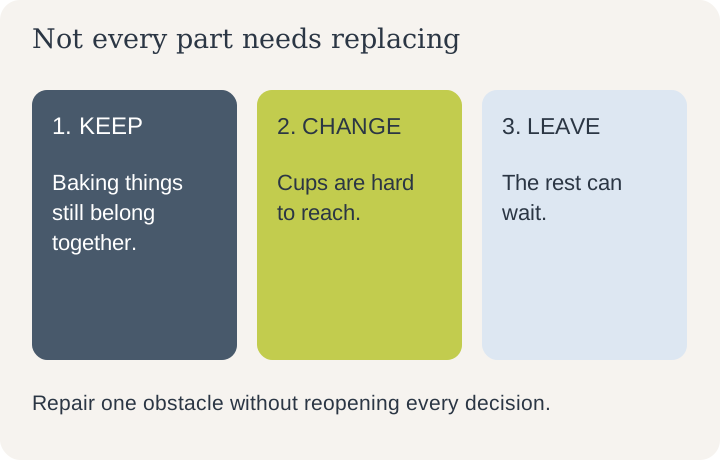
The label still says baking. The flour and sugar are still together.
But the measuring cups have moved to the counter, a mixing bowl is on top of the bin, and opening the cabinet now feels like finding another unfinished project.
You remember setting this up. You remember thinking you had found the answer.
When you have ADHD and another system stops working, it can be hard to see anything except the part that fell apart. Before you pull everything out, look at what is still there.
You grouped the baking ingredients. You know where they belong. That work hasn't disappeared because the cabinet needs attention.
Repair is different from starting over
Starting over asks you to make every decision again. Repair asks a smaller question: where did using this system become difficult?
Perhaps the bin became too heavy. Perhaps you began baking more often and now reach for the measuring cups every day. Perhaps the shelf worked when you lived alone, but someone else uses it too.
Those are different problems. They don't need the same answer.
A system can stop fitting because your life changed, because an arrangement was difficult from the beginning, or because caring for it became more than you had available. You don't have to decide that all your previous effort was wasted.
Find the first place the task breaks
Follow one ordinary use of the cabinet. Not the whole kitchen. The next time you reach for the measuring cups, notice what happens.
Can you get them without lifting the flour? Can you put them back without rebuilding the stack? Is the place they belong obvious when you're finished?
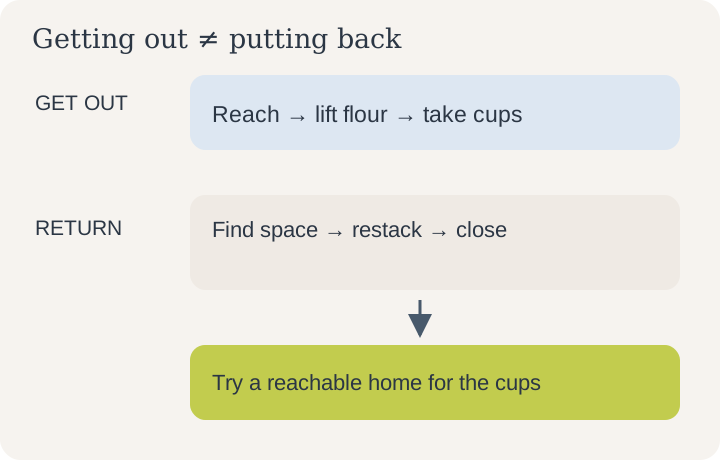
Getting something out and returning it are two different parts of using a space. A cabinet can do one well and make the other difficult.
You might keep the baking category and move the cups to a reachable hook inside the cabinet. Or keep the shelf and divide one heavy bin into two lighter groups. The useful part stays. The part that gets in your way changes.
This is more specific than deciding you need to be more consistent.
Give one repair a fair try
- Name what still works. A category, a location, a label you understand. Keep that decision unless you have a reason to change it.
- Describe the obstacle as an action. “I have to lift the flour to reach the cups” tells you more than “the cabinet is a mess.”
- Change one part. Try the hook, move the cups, or reduce the weight of the bin. Avoid emptying the whole cabinet to test one idea.
- Watch a few ordinary uses. Is reaching easier? Is returning easier? Adjust what you discover rather than grading yourself.
You aren't proving that a system can stay perfect. You're finding out whether this repair supports your days.
Leave a return point, not a promise of perfect upkeep
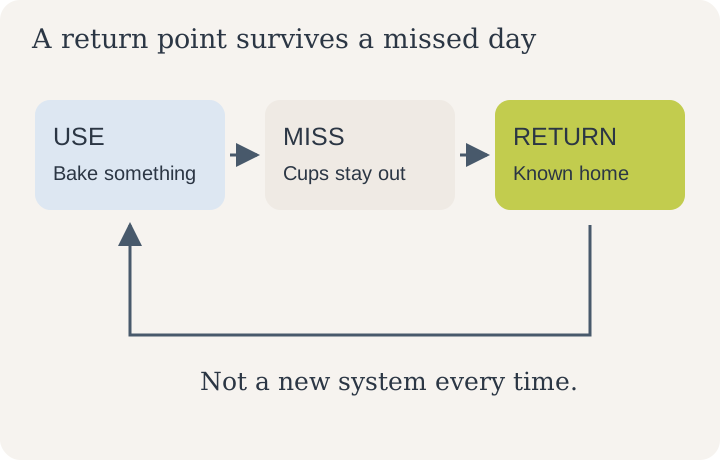
There will be days when the cups stay on the counter. A workable system includes a way to return after that happens.
It might be a visible home for the cups and one small action: return those before starting another batch. It might be putting the heavy bin aside until you can change the arrangement.
Keep the path back recognizable. You don't need a new plan every time the cabinet drifts.
Attention, planning, and remembering tasks can be difficult with ADHD. Changing a cabinet won't remove those difficulties. It can remove an unnecessary obstacle from one task you do at home.
That distinction matters. You deserve useful support without being promised that the right container will solve everything.
You can get help with the repair
If you can see the problem but feel stuck deciding what to change, you don't have to dismantle the space before asking for help.
In a $150 Jump-start hour, you show me one space on live video, as it is. You move the belongings. I stay with you, help you choose a manageable focus, and explain the reasoning as you work.
The PDF overview of the Simply Spacial Method™ comes with it, along with a clear next step. An hour doesn't promise a finished kitchen or a system that never needs care. You keep the final say over your belongings.
You have already done some thinking here. You can bring that with you.
— Kim